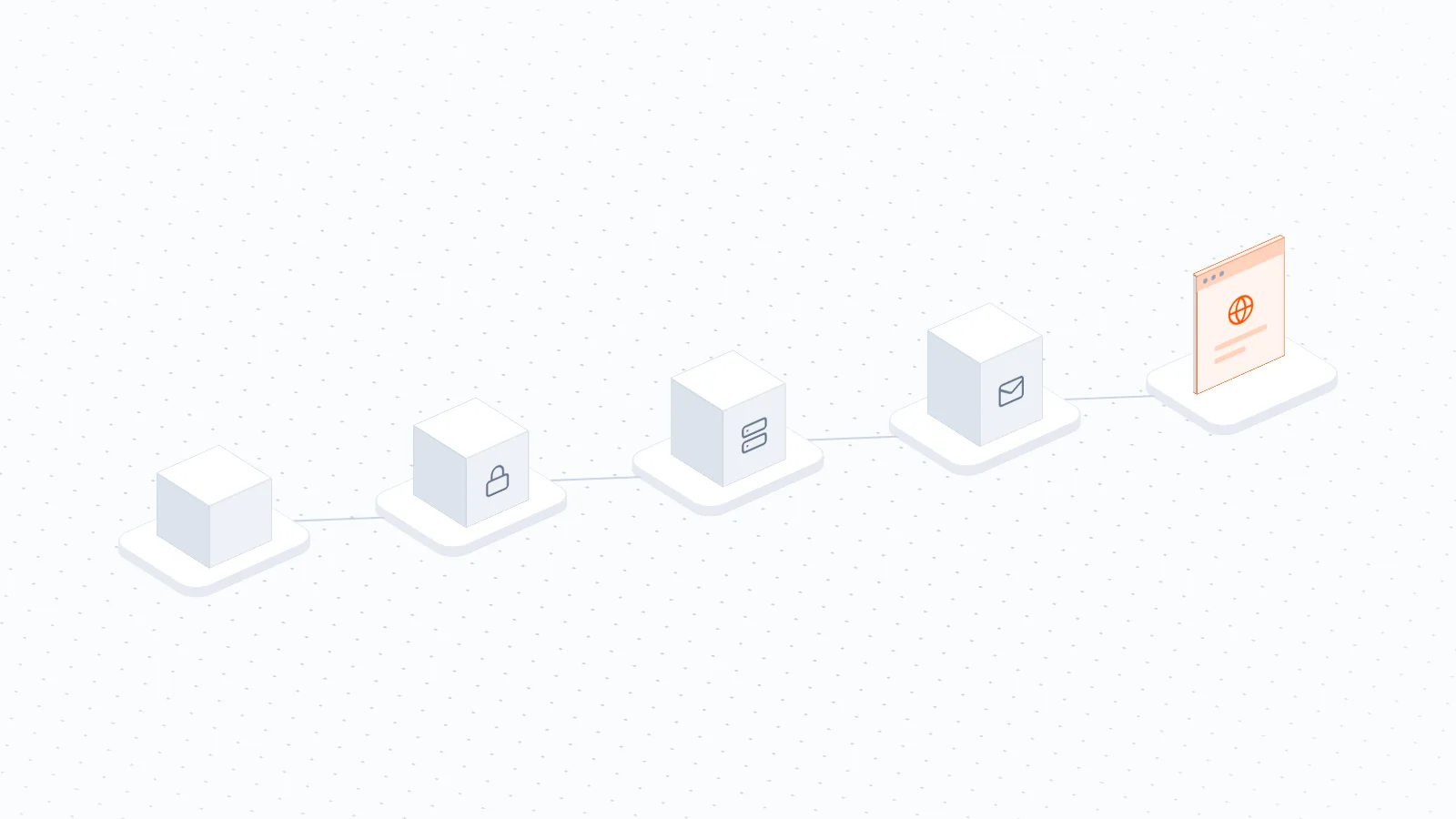
A parked lookalike domain usually shows its intent before it phishes anyone: a certificate appears in public Certificate Transparency logs, its nameservers move to infrastructure the owner controls, mail records go live, and the page changes from a parking page to a copy of your site. Watch for these changes over time, not for the domain alone.
Key terms · 4
Lookalike domain
A domain that imitates yours with a typo, an extra word, a different extension or look-alike characters.
Parked domain
A registered domain that shows a placeholder or ads page and isn't used for anything yet.
Certificate Transparency (CT) logs
Public logs of every HTTPS certificate issued by trusted authorities. Chrome has required certificates to be logged since 2018, so anyone can watch them.
MX record
The DNS record that tells the internet which server receives a domain's email.
Usually you can't, because registrars and hosts act on abuse, and a parked page isn't abuse yet. Watch them, and act the moment one shows activation signals. If a lookalike is cheap and especially close to your name, buying it, or a UDRP complaint where bad faith is clear, are the alternatives.
Does an MX record mean a domain will be used for phishing?
Not on its own. Many parked domains have mail records set up by default by their registrar or parking service. An MX record matters when it appears or changes on a lookalike that had none, especially alongside a new certificate.
How do Certificate Transparency logs help?
Every certificate a trusted authority issues is published in public logs, usually before the site using it goes live. Watching those logs for names that contain or resemble your brand gives early warning that a lookalike is being prepared.
How quickly does a lookalike go from first signal to live phishing?
It varies from minutes to weeks. Some campaigns register, certify and launch in the same hour; others register domains and leave them dormant for months before using them.
Spent seven years in cybersecurity helping build Lumu Technologies before founding Sentrike, where he builds AI agents that find and take down phishing sites and brand impersonators.
Why brand protection outside the firewall is a growing gap in MSSP services: what the market data shows, why clients can't do it in-house, and where MSSPs fit.
How MSSPs and MSPs can turn brand protection and phishing takedowns into a managed service: what goes in each tier, how to price it, and what to report to clients.
How a phishing campaign goes from a new domain to victims' inboxes in about an hour, why most of the damage is done within days, and how that compares with a ticket-based response.
Nov 20, 2026 · 4 min read
Every brand with a recognizable name has lookalike domains registered by someone else: typos, extra words like "-login" or "-support", other extensions, look-alike characters. Most never do anything. A few become phishing sites, often within hours of being switched on. The problem for security teams is telling which is which, early enough to act.
The answer is to watch for change. A dormant lookalike that suddenly gets a certificate, new nameservers, mail records and a login page is about to be used. This article walks through those signals in the order they usually appear, how much weight each one deserves, and what to do at each stage.
People register lookalike domains for many reasons: to resell them, to park them for ad revenue, to protect a brand defensively, or because the name is a coincidence. Others are bought to attack. Some are used right away; newly registered domains in general are disproportionately risky, which is why Palo Alto Networks' Unit 42 found more than 70% of newly registered domains in its 2019 sample were suspicious, not safe for work or malicious (Unit 42). Others are held for months: Unit 42 has also described attackers who deliberately leave domains dormant to build a clean history before using them (Unit 42).
So the age of a domain alone doesn't tell you much. What it does next does.
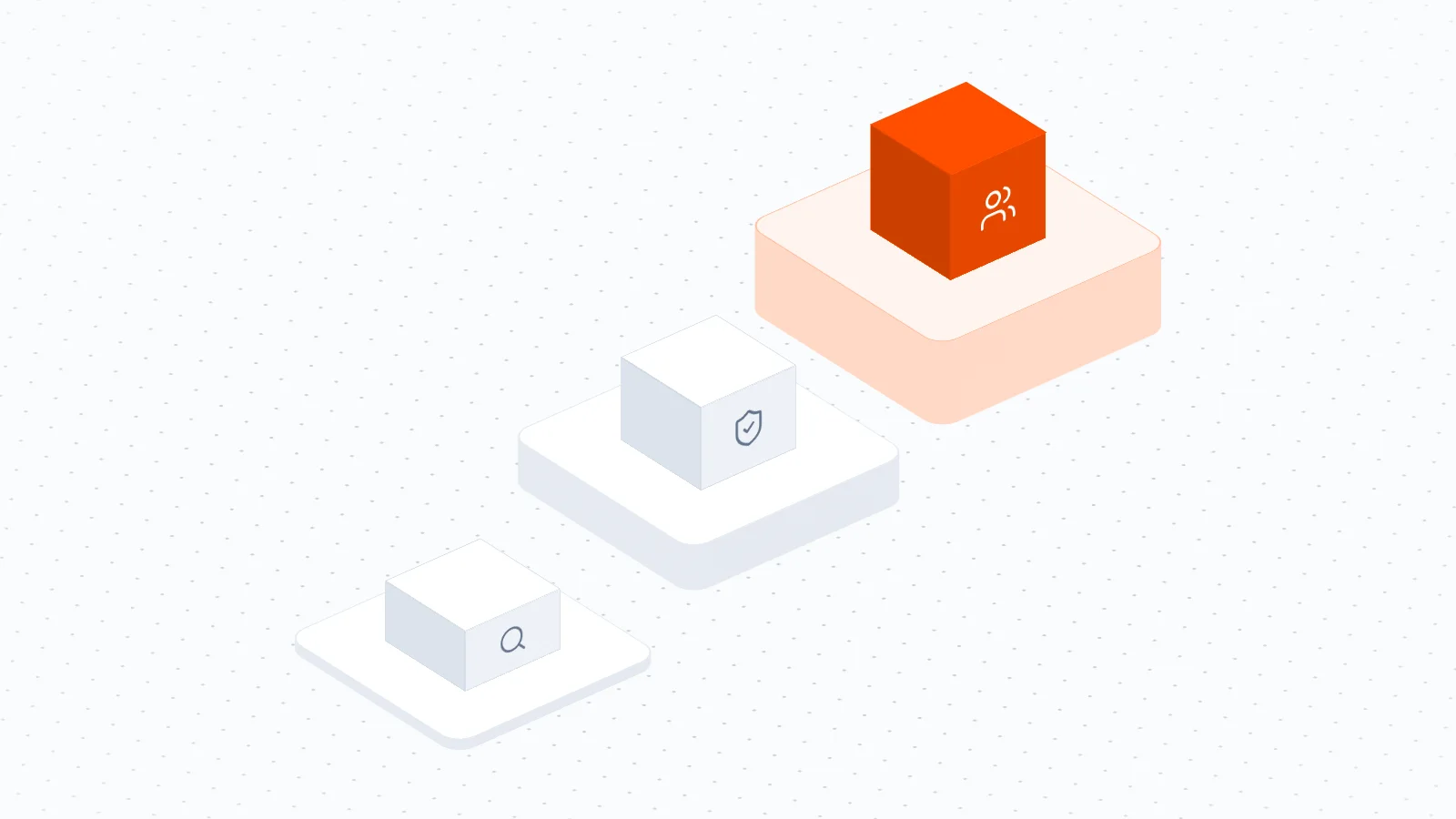
Not every campaign follows this order, and some steps happen within minutes of each other. But together they are a strong pattern: each additional signal on the same lookalike raises the odds that it's about to be used.
Parking services and hosts issue certificates automatically
Nameservers move to owner-controlled infrastructure
DNS
Domain is leaving the parking service
Medium
A real business launching a site
A or AAAA record points to new hosting
DNS
A server is ready to serve content
Medium
Same as above
MX, SPF or DMARC records appear
DNS
The domain is being set up to send or receive email
Medium to strong on a lookalike
Many parked domains have default MX records
Page changes from parking to content
Page monitoring
Something is being published
Strong
A real site going live
Page copies your logo, layout or login form
Page comparison
Phishing preparation
Very strong
Rare; usually a fan or review site without a login form
Two points about these signals:
Change matters more than state. A lookalike that has had an MX record since it was registered is less interesting than one that gained one yesterday. Track each domain over time and alert on transitions.
Combinations matter more than any single signal. A certificate alone is noise; a certificate, new nameservers and mail records in the same week on a domain with your brand in it is a pattern.
The last signal, a copy of your site, is the strongest, and the one attackers work hardest to hide. Phishing kits commonly check who's visiting and show the real page only to likely victims: a phone rather than a desktop, a visitor from one country, anyone who isn't a known security scanner. Everyone else gets a blank page, a redirect or something harmless (Akamai, arXiv).
So checking a suspicious lookalike once, from one place, isn't enough. Check it repeatedly, from different locations and devices, and compare what you see against your real pages.
Before the content stage, there's usually nothing to report: registrars and hosts act on abuse, not on intent. The value of watching the earlier signals is that when the content does appear, you already know about the domain and can report it within minutes instead of days.
Sentrike Brand Protection watches new domain registrations, certificates, DNS records and web pages around the clock for lookalikes and copies of your site. When a lookalike goes live as a phishing site, Sentrike Takedown reports it to browsers, the host and the registrar right away. See Brand Protection.